
Organizational design

Organizational design: Human-centered structures for successful digital transformation
Digital transformation in companies only achieves its full potential if employees are successfully engaged. Human-centered organizational design refers to an approach that focuses not on technologies, products, or processes, but rather on the needs and skills of employees. These are then aligned with the company’s requirements.
Digital transformation often gets out of hand, and employees quickly feel disengaged, and digital transformation stalls. For example, automation often goes hand in hand with fear of loss. We ensure that digitalization not only evolves toward efficiency, but also doesn’t forget people and their organizations. After all, happy people are more productive!

Your benefits from effective organizational design
Modern organizational structures place people at the center and thus meet the goals and requirements of today and tomorrow:
- Independence: After the consultation, you can continue to improve your organization yourself.
- Collaboration: We encourage all stakeholders to listen and collaborate.
- Flexibility: We ensure that your organizational structures match the way your teams develop software efficiently.
- Productivity: Software development becomes agile, making it easier and faster.
- Efficiency: Through better and more direct communication and improved processes, your teams can achieve their goals faster.

Our approach to organizational design
We speak to relevant stakeholders at all levels – from software engineers to top managers:
- Where are they?
- What expectations do employees and managers have?
- What knowledge is available?
- What visions and goals are there?
- Where do we need to mediate?
From this we develop our approach, which is tailored to your situation:

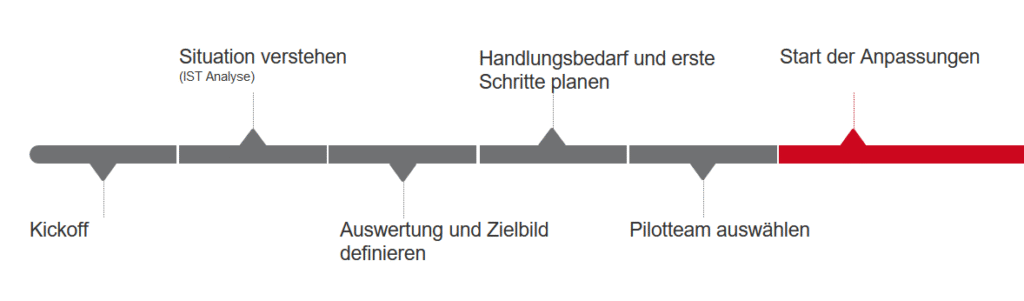

1. Kick-off
- Formulate and sharpen a common vision
- Define goal and purpose
- Define scope and employees for the current analysis

2. Interviews with employees
- Where do you stand personally?
- What’s going well?
- What could be improved?
- Where and how can they get involved

3. Analysis of the organization
- Development processes
- Decision-making structures
- Value stream analysis
- Communication channels
- Review of the results of workshops already conducted

4. Develop a target image from the interviews
- What problems are identified?
- What possible solutions are there?
- What is the current mood?
- Who would be suitable to participate?
5. Develop a target image from the analysis of the organization
- Where can optimization be done?
- Is it clear who can decide what and what has been decided?
- Which work steps take how long?
- What do employees think?

6. Identify the need for action in various areas
- organization
- team
- Development methodology
- Project infrastructure
- methodology
7. Implement the first steps
Once the need for action in the various areas has been identified, the first steps can be implemented:
- Further work packages are being prioritized, developed and planned.
- Establish regular exchange.
- Creating a communication plan to address uncertainties
- avoid.
- Start of the pilot phase with the first work package.

Advantages of our approach
- The result: satisfied employees, satisfied customers.
- Product development continues throughout the entire process. Both are coordinated and aligned.
- We involve all stakeholders.
- We not only provide recommendations for action, but also support you in its implementation.
- We talk to the team and the superiors.

Patrick Labud, Senior Consultant, bbv
Flexible structures are the backbone of sustainable companies. We support you in designing these structures efficiently and maximizing the potential of your employees through active participation.
Would you like to unlock the potential of human-centered organizational design in your company?
Then let’s talk!

FAQ on organizational design
How does the organization benefit from this?
By involving employees in decision-making and creating a supportive work environment, the organization can increase its efficiency and adapt to change more quickly.
What are the special features of bbv’s approach?
We not only provide recommendations for action, but also support you in its implementation, involve all stakeholders, and your product development can continue throughout the entire process.
What happens after our consultation?
After the consultation, you can develop your organization independently if necessary.
You might also be interested in

Digitalization in healthcare
“Digitalization fails when it takes away people’s autonomy”
Autonomy is crucial for doctors. “If the digital industry tries to take over doctors’ roles, it will lose,” says cognitive psychologist Damian Läge. In an interview with Adrian Bachofen, Chairman of the Board of Directors of the bbv (German Association of Medical Device Manufacturers), he explains what autonomy has to do with the boom in the gaming industry and what responsibility tech companies have.
You might also be interested in

Ecosystems
How seriously do you take digital transformation?
“If you don’t destroy the industry, someone else will!” With these dramatic words, Gisbert Rühl, CEO of Klöckner & Co., demonstrated that digitalization is a top priority. The steel trader has pioneered digital work in its industry – thanks in part to “multi-sited platforms.
You might also be interested in

Value Proposition Canvas further developed
Customer experience lays the foundation for new digital business models
Digital business models are not an end in themselves. They involve more than a technical solution. What’s crucial is the transformation toward customer-centric value creation, which entails a fundamental cultural shift. This is a challenging task that can only be achieved within an interdisciplinary team, says Markus Holzner, Business Area Manager at bbv.
You might also be interested in
Successfully implement changes in the company
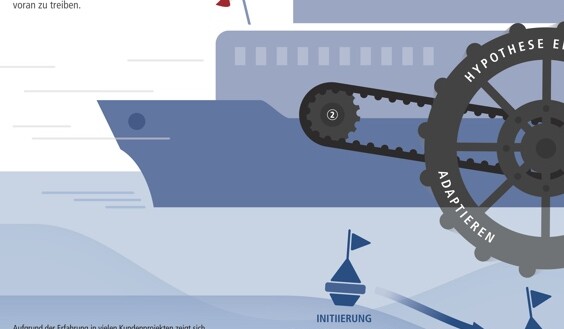
Success factors in change management
The poster “Success Factors in Change Management” shows what’s important when it comes to change in companies and how to implement it successfully. It identifies seven aspects and illustrates them in a clear graphic.